
You Have Made Them Equal to Us | A Sermon on Grace and How It's Always (also) Someone Else's Good News
A Sermon by the Reverend Crystal J. Hardin on the Seventeenth Sunday in Pentecost, September 20, 2026 (Year A).
Jonah 3:10-4:11; Matthew 20:1-16
The Book of Jonah is best known, of course, for a minor character –the big fish, or whale—and yet this short book offers an outsized study in justice, mercy, and the love of God.
It begins with God calling Jonah to journey to Nineveh and to cry out against them. Nineveh is part of the Assyrian Empire –the very enemies of Jonah and his people –and you think Jonah would jump at the chance to call them out (or, at the very least, feel honored to have been chosen a prophet of God). Instead, he boards a boat going in the complete opposite direction.
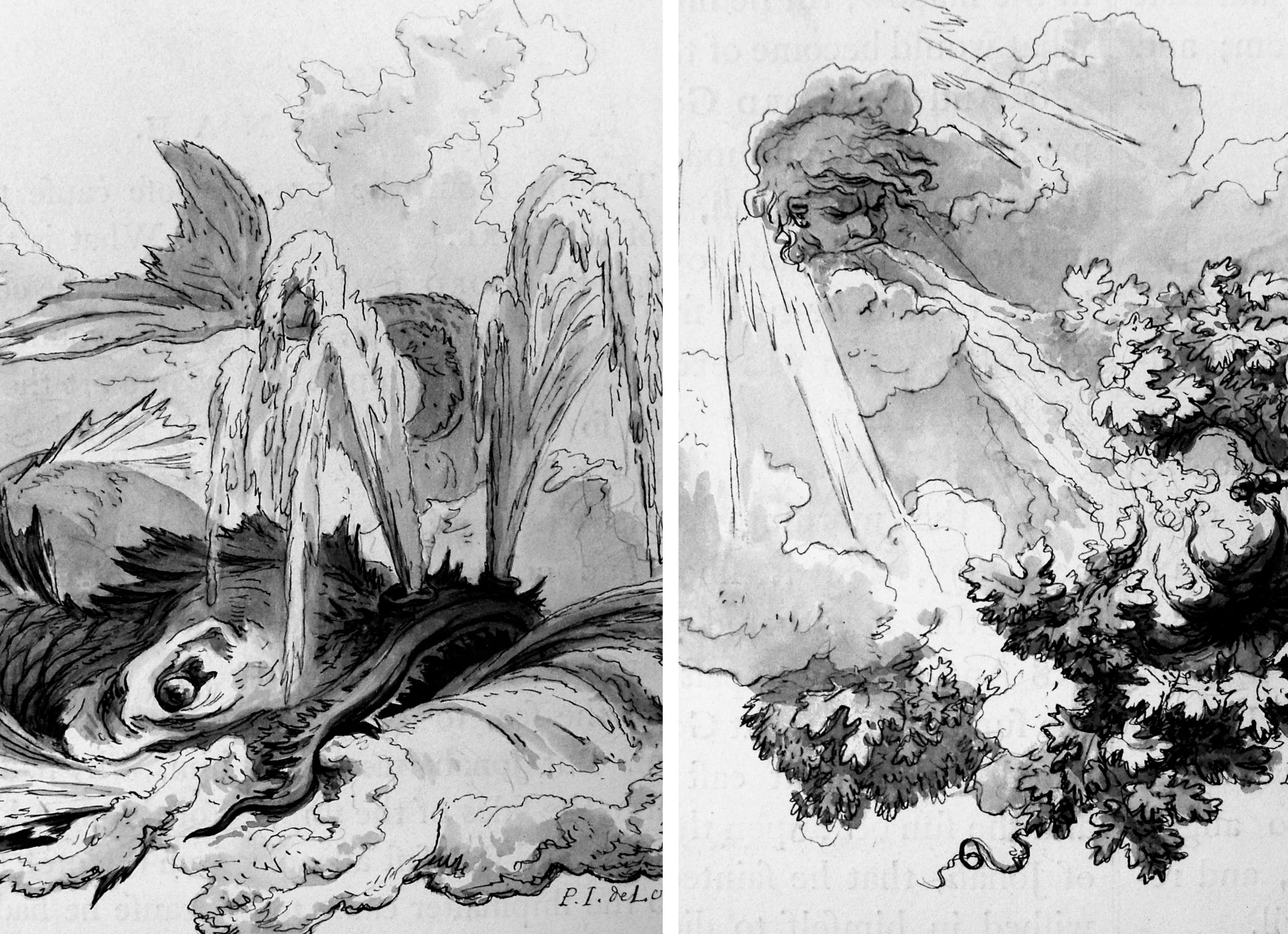
God doesn’t care of course for Jonah’s behavior. He sends a storm that threatens everyone on the boat carrying Jonah. The crew eventually throws Jonah overboard, where he is swallowed by a large fish. After three days in the belly of the beast, Jonah finally prays to God, and is promptly spewed out upon dry land.
This is where we find him in today’s reading from the Old Testament –in his second act, so to speak –still covered in fish goop I imagine. God has given him another chance and Jonah finally obeys, entering the heart of the city and spreading God’s call to repentance. And, as it turns out, he is quite successful. The people of Nineveh believed God; they proclaimed a fast, and everyone, great and small, put on sackcloth (Jonah 3:5).
End scene.
This is a story about second chances, redemption, the transformative word of God. I mean, look at Jonah, a reluctant prophet, but one who, when given a second chance, turned it around and was wildly successful in the end. Look at Nineveh, that once wicked city, transformed as if overnight, a beacon of hope for all. No more to see here.
And yet. The Book of Jonah has a last act, and it’s not this one.
Jonah is aware of God’s might and is keen to witness God’s judgment on a people long wicked and only recently repented. So, he waits –even after his work there is done. And watches for the judgment of God.
And, God does judge Nineveh; but God acquits, changing his mind about the calamity that he had said he would bring upon them (Jonah 3:10).
And Jonah, the very vessel of God’s redeeming Word, stands looking on, witnessing a fundamental truth about the God he serves: God is merciful even when Jonah would rather God were not.
God’s mercy did not surprise Jonah. In fact, knowing exactly what God was like is what stirred something ugly up within him; something that had Jonah setting up front row seats to witness a hoped-for destruction of his enemies.
Tell me that you haven’t been there, in that front row seat, and I’ll ask you to look again. To dig deeper. To be a bit more honest. Who among us hasn’t longed in some way for retribution? Hasn’t hoped that our adversaries would get their just desserts? Hasn’t felt the kindling of a far cry from love in our bellies and seen it surface in ugly ways? Of course, we have.
There is little doubt that Jonah had good cause to be both angry with and to fear Nineveh, God himself acknowledged the wickedness of that place. And Jonah wanted justice. And, you know, I get that. He wants the kind of justice that makes the world orderly and clear. The kind that tells us there are good people and bad people, victims and perpetrators, the people we celebrate and the people we condemn. The kind that assures us we know who belongs in which category.
That’s the justice Jonah waits for, even though he suspects it isn’t coming. Instead, God has mercy. And Jonah is furious. “That is why I fled to Tarshish at the beginning, he says; for I knew that you are a gracious God and merciful, slow to anger, and abounding in steadfast love” (Jonah 4:2).
And I don’t want to dismiss Jonah’s anger too quickly. Nineveh represents real violence, real fear, real hurt. To walk through the streets of the enemy and discover that God sees those people differently than Jonah does, that God’s mercy reaches even here, must have been deeply disorienting.
You have made them equal to us (Matthew 20:12).
Because there is a seductive clarity to dividing the world in to the deserving and undeserving. And grace ruins it.
Jonah sits outside Nineveh waiting for God to destroy people who have received mercy.
And in today’s Gospel, laborers stand in a vineyard staring at people who have received generosity. And their complaint is almost exactly the same: You have made them equal to us.
And that, apparently, is one of the most scandalous things about the grace of God.
We hear about a certain landowner with, what seems to be, a very large, an extravagantly large, vineyard. At multiple points - from the wee hours of the morning until the sun is readying to set on the work day - he goes to the marketplace, looks around, and pulls an Oprah. You get work and you get work and you get work.
He takes them all, anyone who wants work, even though towards the end of the day it must have been pretty slim pickins. Those hired first contract for an acceptable day’s wage; those who come later are simply told they will be paid whatever is right.
Which means that, from the beginning, everyone is depending on the honesty and sense of justice of the landowner.
All is well and good on the vineyard until the day draws to a close and it becomes obvious that this is a parable and not an article in The Economist.
Because the landowner apparently sees little difference between the rise-and-shiners, the heavy lifters, the go-getters —those who are sweaty and sunburnt —and those who worked only an hour before clocking out for the day.
All of them are paid the same. This is obviously offensive. And yet, those who have been working all day break it down, just in case: You have made them equal to us. We have borne the burden of the day and you’ve made them equal to us.
There is no objection to what is received. The objection is with the generosity of the landowner. The abundance with which he has treated the last of these has triggered the righteous indignation of the first to work. Any sense of achievement for a solid days work suffocated. Any gratitude soiled. Any joy stifled.
Simply because the landowner’s generosity refuses to preserve the distinction between them.
Grace is relatively easy to love when we are the ones being pulled dripping from the sea. When we are the ones given another chance. When we are the ones receiving more than we could ever have earned.
It becomes considerably more complicated when God extends that same grace to Nineveh. Or to the worker who showed up at the eleventh hour. Or to the person we have already decided should know better, do better, be better.
Jonah doesn’t seem to have much objection to mercy when mercy saves Jonah.
And the laborers don’t object to the landowner’s generosity when it gives them exactly what they were promised.
The problem comes when grace becomes someone else’s good news.
Are you envious because I am generous? (Matthew 20:15).
Well. Sometimes, yes.
Because grace has this terrible habit of crossing the boundaries we set for it. It keeps landing in hands we would not have chosen. It keeps making neighbors out of enemies and equals out of people we had sorted into very different categories.
You have made them equal to us.
If we place ourselves in that receiving line, it is tempting to identify with those who showed up to the marketplace in the wee hours of the morning. Who were hungry for work and who then worked hardest and longest. Who lined up to be paid and felt slighted by the hand dealt to those who were less deserving. Who thought, this isn’t fair! But who couldn’t quite put a finger on why not, just that we knew better. As if fairness and justice were ours to own and to distribute as we see fit.
Are you envious because I am generous? Yes. Because you have made them equal to us.
But what if we identified instead with the workers who got more than they expected to — imagine their surprise at receiving such generosity.
First or last, envious or ecstatic, we are actually all of them. All of them, whether we rejoice in that fact or not. Because, really, this isn’t about the workers at all, it’s about the landowner and the kingdom.
Remember that the story begins, For the kingdom of heaven is like a landowner who went out early in the morning to hire laborers for his vineyard (Matthew 20:1).
That was our first clue that what we thought we knew about the world might be turned on its head, a little like Alice entering wonderland. For the kingdom of heaven is founded not on our ideas of prestige and hierarchy, not on our human potential or intervention, not on our feelings about fairness or outrage over perceived injustice, but on God’s own divine generosity and the triumph of grace.
It’s all grace.
And it is offensive as all get out, because grace does not conform to our expectations. It doesn’t play by our rules. It cannot be calculated. If it did not disrupt the categories by which we order the world, it would not be grace.
This is God’s vineyard, after all. And God deals in grace.
Fortunately for us, we are not charged with deciding who is invited, and we are not responsible for distributing the gifts. Because if we were, we would almost certainly try to make it fair. We would decide who had worked long enough, repented deeply enough, suffered sufficiently, behaved well enough. We would decide who deserved what.
But God refuses to let our categories of deserving and undeserving determine the boundaries of God’s mercy.
We all stand in the same line to receive what none of us could earn.
Jonah has already stood in that line. He has already been given the second chance. He has already been pulled dripping from the sea and discovered for himself that God is gracious and merciful, slow to anger, and abounding in steadfast love.
He simply hadn’t counted on Nineveh standing in the same line.
And perhaps neither have we.
This is God’s vineyard, after all. And God deals in grace.
Jonah knows it. He knows it so well that he runs in the opposite direction rather than announce it to people he despises.
The laborers know it. They watch the landowner place the same day’s wage into hands that worked only an hour, and they cannot stand it.
And we know it too—or at least we think we do—until grace lands in the hands of someone we have already decided does not deserve it.
You have made them equal to us.
Because what makes the grace of God offensive isn’t who it leaves out. It’s who it lets in.
Nineveh.
The eleventh-hour worker.
The person we cannot forgive.
The person we cannot understand.
You. Me.
All of us standing in the same line, receiving what none of us could ever earn.
It’s all grace. Amazing grace, indeed.
Amen.
The image is courtesy of Wikicommons; from the Bowyer Bible
