More Than Words Written in Stone | A Sermon on the Ten Commandments and the God Who Speaks
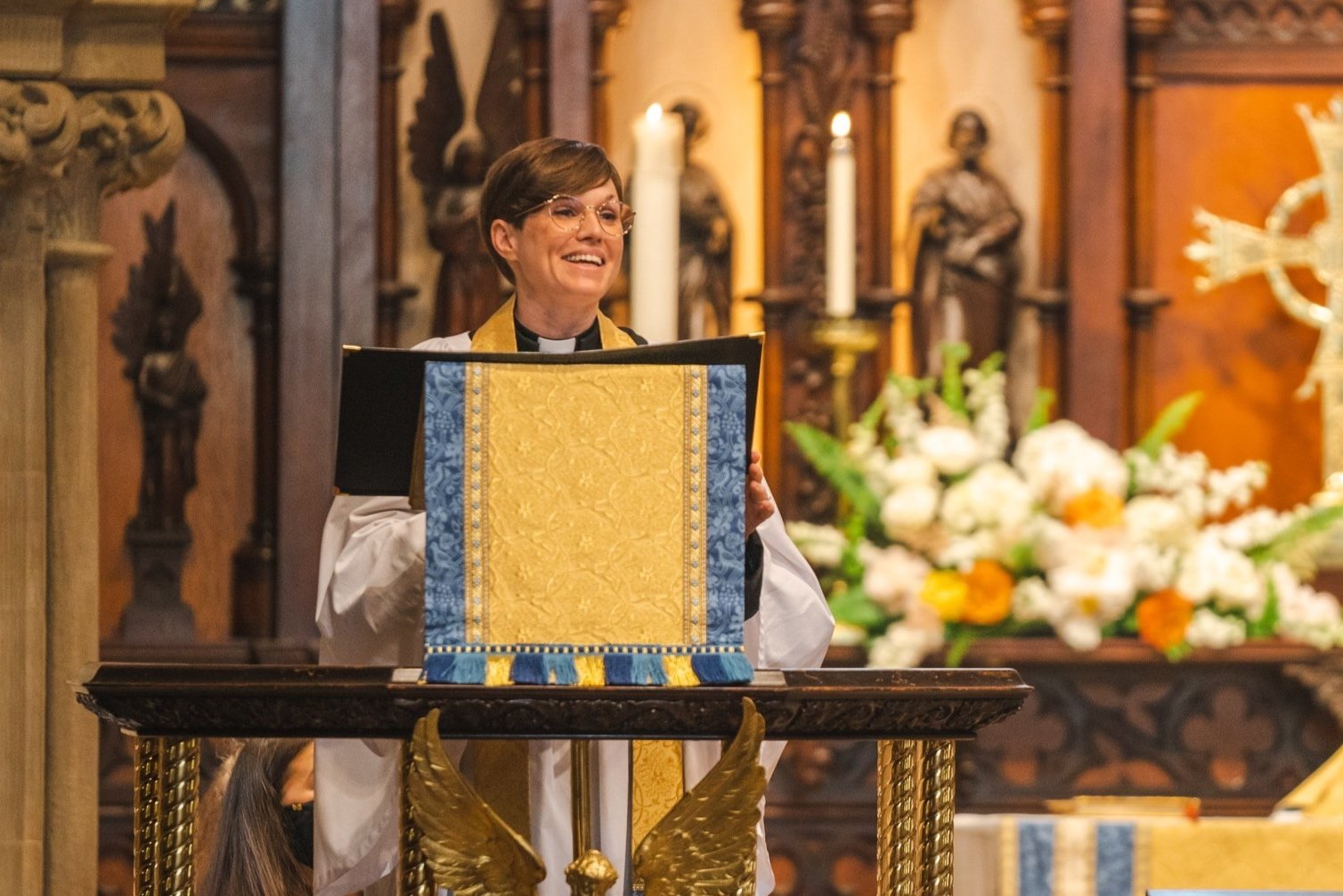
A Sermon by the Reverend Crystal J. Hardin on the Nineteenth Sunday after Pentecost, October 4, 2026.
Exodus 20:1-4, 7-9, 12-20
I grew up in small town Alabama as a Southern Baptist, which means that I know a thing or two about the Ten Commandments. They were the preeminent religious text of my childhood. Everywhere I looked, there they were —from classrooms to ball parks to family rooms. Framed, laminated, posted, memorized.
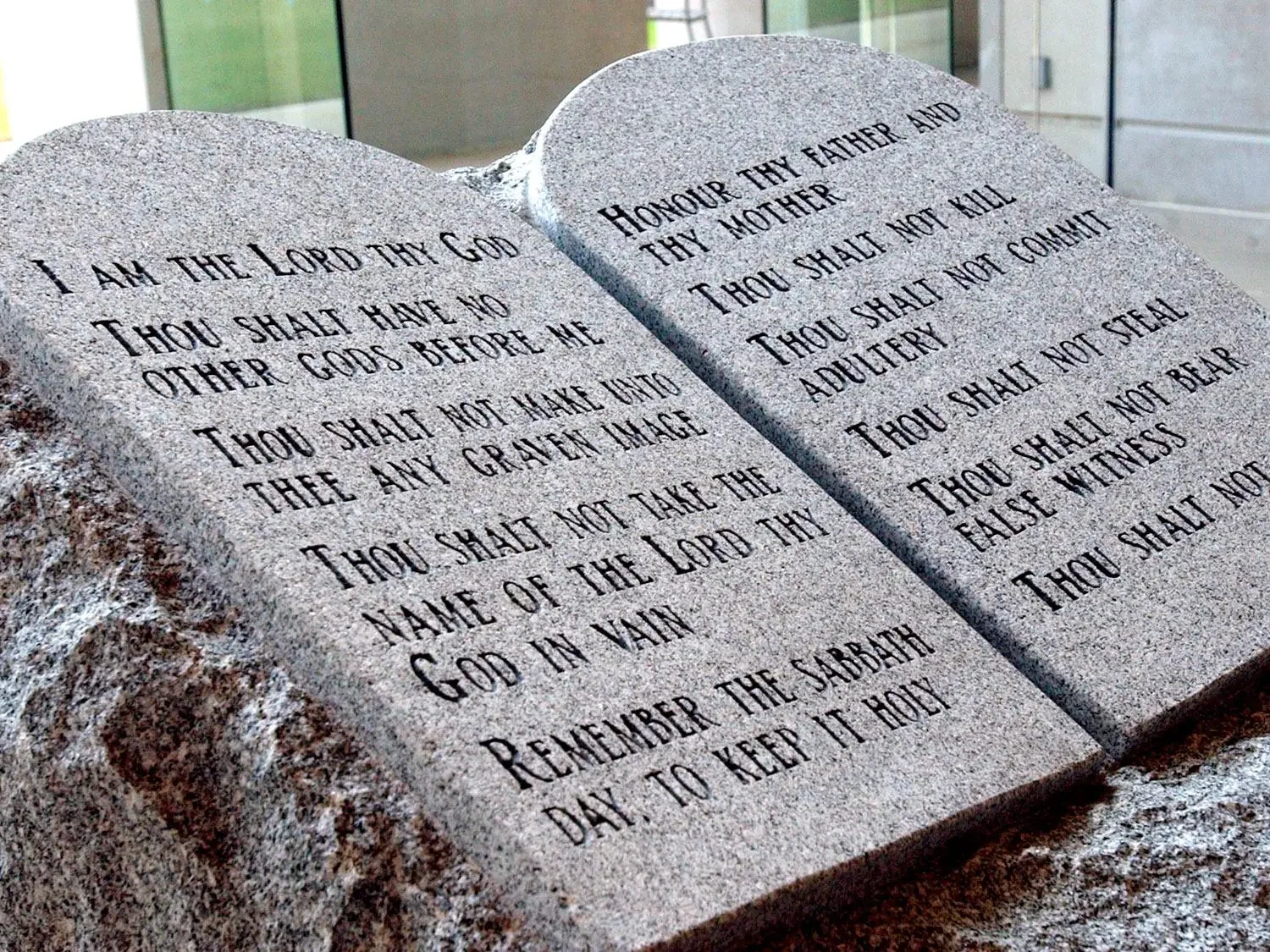
I came of age in the time of Roy Moore, who literally campaigned as the “Ten Commandments Judge” and was elected as Alabama chief justice in 2000, the year I graduated from high school. Right away he begins designing a monument that depicts, in his words, “the moral foundation of the law.”
The Southern Poverty Law Center remembers it this way:
Under cover of night, Moore unilaterally has a 5,280 pound granite monument of the Ten Commandments installed in the rotunda of Alabama’s state judicial building. It was removed by court order 2 years later [1].
Last year, Texas passed legislation requiring the Ten Commandments to be displayed in public school classrooms. The law is remarkably specific. The poster must measure at least 16 inches wide and 20 inches tall, use an easily readable typeface, and be displayed in a conspicuous place [2].
Obviously this law is making its way through the courts, and as a recovering attorney I am fascinated by every bit of it. But as a priest (no, as a Christian), I am interested in a somewhat different question.
Because I grew up believing that the Ten Commandments were THE rules to live by. They were God’s expectations of us, neatly organized into ten relatively straightforward instructions. Follow them and you were doing what God wanted. Break them, and, well, that’s what Sunday morning altar calls were for.
I don’t remember spending much time thinking about what came before the commandments. Or about the people who first received them. Or even about why God gave them in the first place.
I knew the rules by heart; I just hadn’t learned to hear the story they were telling.
And I wonder if that’s a temptation for all of us. To take the words of God and turn them into something to be displayed, defended, measured, or mastered. To become so preoccupied with the commandments that we lose sight of the God who gave them.
Because there’s something rather extraordinary about the Ten Commandments that I managed to miss until much later in life.
They don’t begin with a commandment.
They begin with God.
Then God spoke.
These words recall Genesis (1:3) and the creation of the world, as God spoke all that is and all that will ever be into existence and declared it good. It is that God, the Creator God, who speaks now, which is made clear by the opening words:
I am the Lord your God, who brought you out of the land of Egypt, out of the house of slavery (Exodus 20:2)..
God has led the Israelites through the Red Sea out of slavery in Egypt, feeding them in the wilderness with manna from heaven and leading them here, to Mount Sinai. God has freed them. God has fed them. And, now, God is speaking to them.
Who God has been to them —Creator, Sustainer, Liberator—leads to what God will say to them now: the Ten Commandments. Some of the most familiar words of Scripture and of Christian tradition. Because the ten commandments are familiar, we think we know them. We may be too sure of them. And this tempts us to lift the words out of their context, which is God’s context, and to set them instead within our own.
You see, the Commandments are part of a pre-existing covenant between God and the Israelites gathered at Mount Sinai. God has already chosen and established a covenant with Abraham. God has already displayed a passionate love for God’s people. Now, God offers the Commandments as a gift, describing a way of common life that will allow for freedom, fruitfulness and flourishing amongst God’s people. The Spirit of the Commandments professes a profound reality: this is the way of love. This is what it looks like to love the Lord your God and to love one another. This is what it looks like to live in fullness. To live with integrity.
Take the commandment to remember the Sabbath and keep it holy.
Growing up in the South, I knew a good many rules about what you could and couldn't do on Sundays. And I suspect that some of you did, too. But imagine hearing this commandment for the first time as someone who has just been liberated from slavery. Someone whose entire existence, whose very worth, has been measured by what they could produce for somebody else.
And now God says: Rest.
Not when you've finished everything. Not when you've earned it. Not when somebody else decides you deserve it. Rest.
Because you are no longer enslaved. Because your worth is not determined by your labor. Because this is what freedom looks like. And this gift isn’t theirs to keep to themselves. Even the people who work for them, even the strangers living among them, are to share in that rest. Because freedom that belongs only to us isn’t quite the freedom God has in mind.
Suddenly, what sounds like another restriction becomes an extraordinary declaration of liberation.
There is a temptation to translate the commandments into our own finite language, the language of rules and right belief. A language that seeks ownership of the commandments, that turns our hearts away from God and instead takes the measure of those around us and of ourselves.
It is a language of individualism rather than community, of moralism rather than Christian transformation.
And transformation, as it turns out, can be terrifying.
Because as soon as God stopped speaking, the crowd turned to Moses and said, “You speak to us, and we will listen; but do not let God speak to us, or we will die” (Exodus 20:19). This encounter with God left them afraid; they are terrified of hearing God directly.
And perhaps we can sympathize. Because there is something infinitely more manageable about a set of commandments than an encounter with the living God.
Commandments can be memorized. They can be written down, carved into stone, framed, laminated, and hung on a wall.
But the God who speaks them cannot be so easily contained.
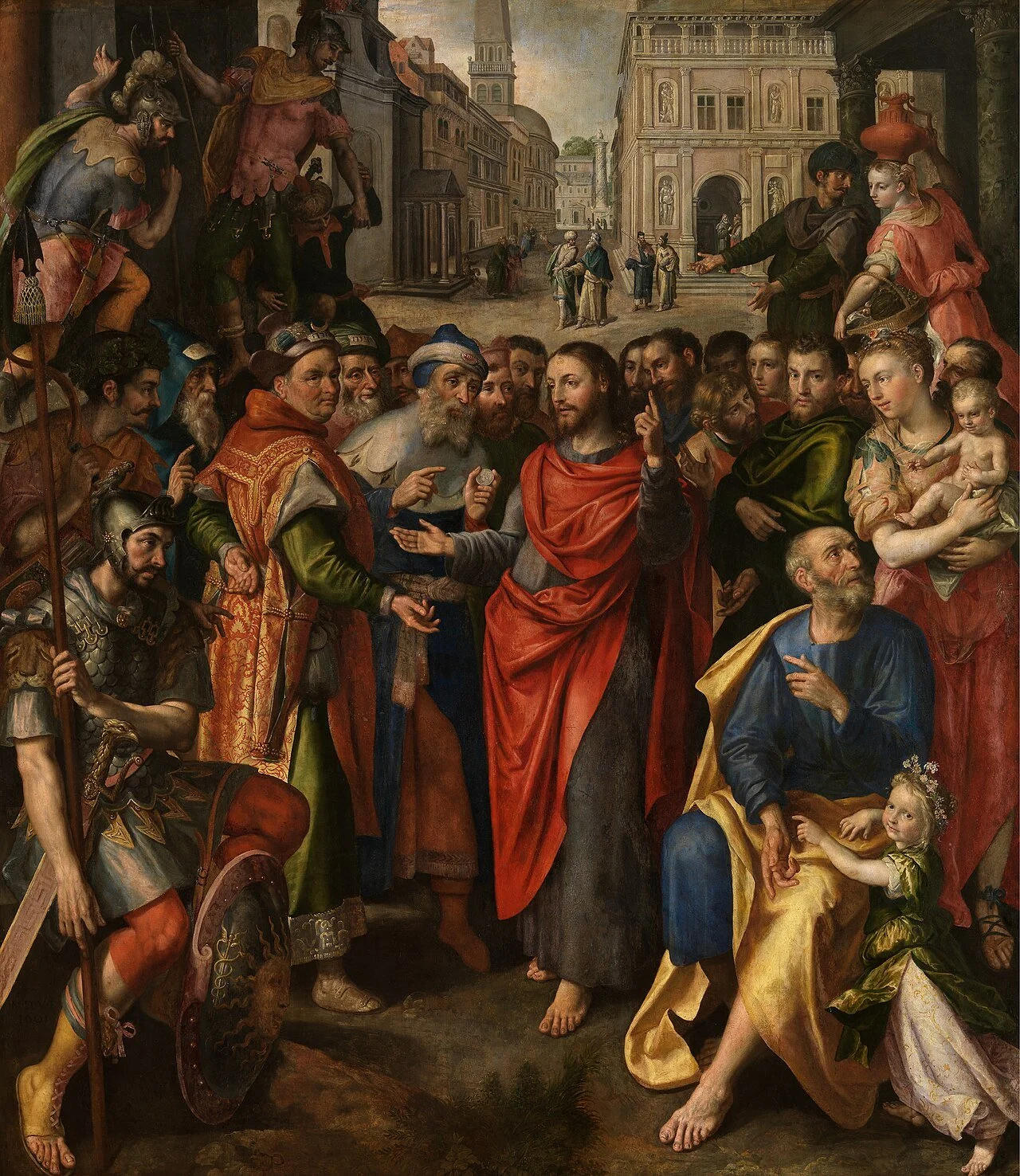
In today’s Gospel, Jesus tells a parable about tenants who have been entrusted with a vineyard. Chosen stewards. But somewhere along the way, the tenants begin to behave as though the vineyard belongs to them. When the landowner sends his servants, they refuse to receive them. And when he sends his son, they kill him, hoping to claim the inheritance for themselves.
There is something terribly familiar about this. The temptation to take what has been entrusted to us and claim it as our own. To mistake stewardship for ownership. To become so invested in what God has given us that we resist the God who gave it.
And perhaps there is no more dangerous place for that temptation to take root than in our understanding of God. Because the God who spoke at Sinai cannot be reduced to the words we have written down, however sacred those words may be.
The God who spoke at Sinai has never stopped speaking. Through the prophets. Through the ongoing life of God’s covenant people. And ultimately, we profess, in Jesus Christ, the eternal Word made flesh.
The Word does not remain safely inscribed on tablets of stone. The Word comes to dwell among us.
Jesus is the Word spoken to us and for us. A word not dependent on our ability to understand or reciprocate. A word that cannot be mastered by us. A word for us, but not owned by us.
As Christians, we profess a faith in this Word and a commitment to following him. As one preacher puts it “the way of faith is to follow Jesus the Christ not the rules that have grown up around the faith through the millennia, but Jesus. This is not to say that certain rules and disciplines might not help us to focus our attention on God. But, all too swiftly, the rules and disciplines can become ends in themselves, rather than a holy life lived.”
Barbara Brown Taylor, reflecting on the Ten Commandments, offers a wonderful image. She imagines the commandments as tent posts driven into the ground, supporting a tent in the wilderness. A shelter for God’s people. A way for them to live together and survive together, guarding their relationship with God and one another.
And I find myself thinking about the distance between that tent and the monument I grew up with in Alabama.
Five thousand, two hundred and eighty pounds of granite.
And ten posts holding up a tent in the wilderness.
One is a monument; The other is a dwelling place.
And perhaps that’s the invitation before us. Not simply to know the commandments or defend them, but to receive them as gifts from the God who has already liberated us, already provided for us, and already claimed us as God’s own.
A God who has not finished speaking.
Because the Word became flesh and dwelt among us. And in Jesus Christ, we encounter the fullness of that same divine love that brought the Israelites out of Egypt. We encounter a God who does not wait for us to get all the rules right before coming to us. A God whose love precedes our obedience. Whose grace makes possible our transformation.
The Ten Commandments were never intended simply to tell us how to be good. They were given to show God’s people what it means to be free.
So perhaps the question for us is not simply whether we know the commandments, or whether we have managed to keep them. Perhaps the question is whether our lives have become the dwelling place that God imagined.
A place where God’s love takes root. Where our neighbors find shelter. Where freedom, fruitfulness, and flourishing become possible for everyone. And where the Word of God, spoken so long ago at Sinai, continues to find expression in us.
Amen.
[1] https://www.splcenter.org/resources/stories/judge-orders-removal-ten-commandments-monument.
[2] https://www.texastribune.org/2025/05/24/ten-commandments-texas-schools-senate-bill-10/