
This Is the Story of the Family of Jacob | A Sermon About Inheritance
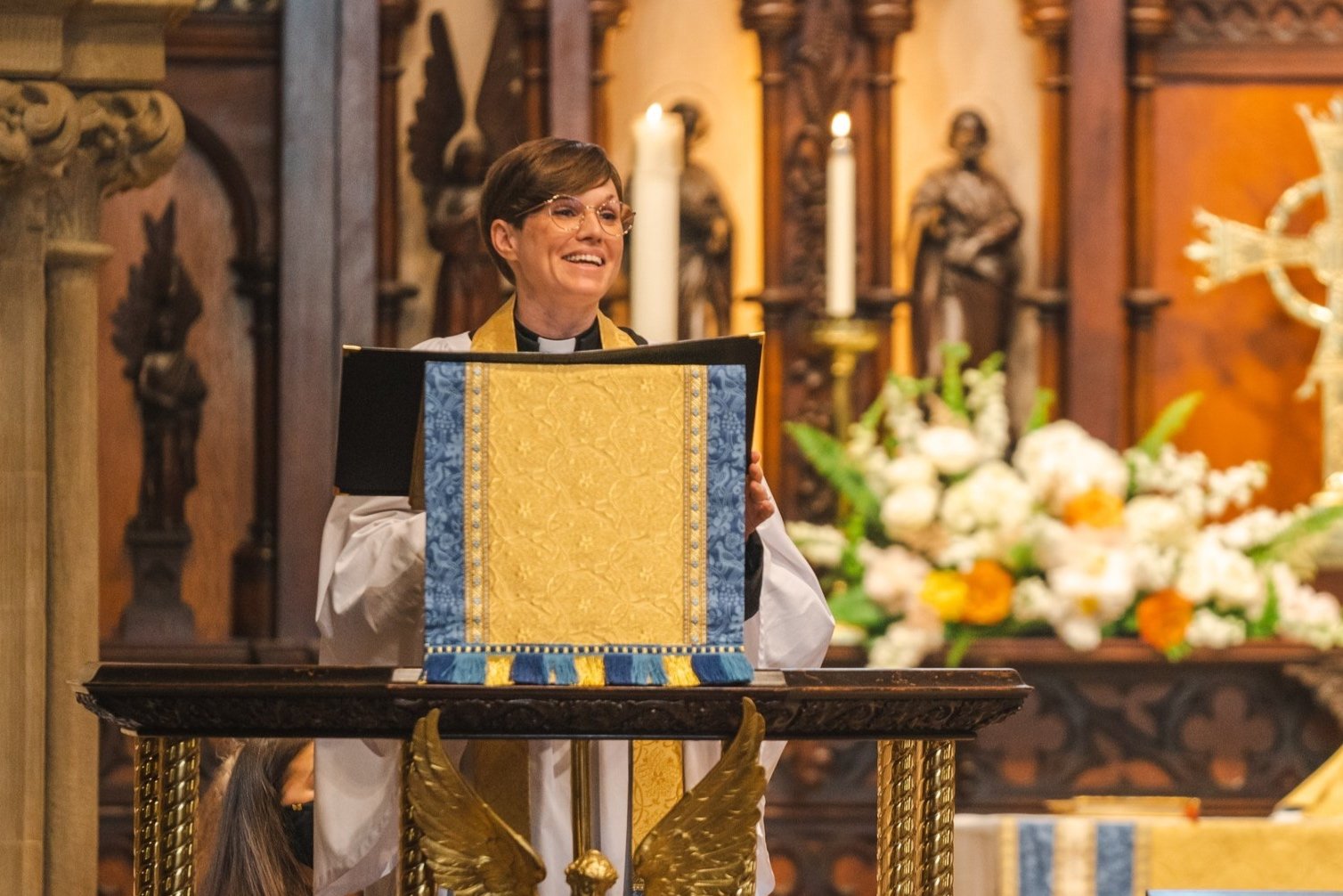
A Sermon by the Reverend Crystal J. Hardin for the Eleventh Sunday after Pentecost, August 9, 2026.
Genesis 37:1-4, 12-28
This is the story of the family of Jacob (Gen. 37:2).
That is how this section of Genesis begins, which is interesting because almost immediately the story turns to Joseph: Joseph, seventeen years old and tending the flock with his brothers; Joseph, being “that guy” and snitching on those brothers; Joseph, beloved by Jacob more than all his other children; Joseph, given that famous robe. The story seems, at first, to belong entirely to him.
And yet Scripture tells us: This is the story of the family of Jacob.
Because this is not simply a story about one boy in a beautiful coat. It is a family story, and family stories are rarely about only one person. They carry with them everything that came before: old loyalties, old rivalries, old injuries — ways of loving and fighting and surviving that were learned long before anyone stopped to ask whether they were worth passing on.
One of the things we understand now, perhaps better than we did a generation or two ago, is that genetics are not the only things passed down through a family line. We inherit simple things like eye and hair color; a singing voice or lack thereof (thanks for nothing, family). And we inherit complex traits, manners of moving through the world: how conflict is handled, whether anger is expressed or buried, what success means, what failure costs, whether affection is spoken aloud or merely assumed. We inherit family stories and family loyalties, certain anxieties and expectations —sometimes even wounds buried in a time so long past that we couldn’t find them even if we tried.
I inherited my blue eyes from my father. I inherited his sense of humor too. And, I also inherited from him a pull towards addiction —not in quite the same, simple way, of course, but through some combination of biology, environment, example, and all the other complicated ways a family teaches us how to live.
My father’s side of the family rarely talked about who or what came before (as if they had sprung out of the dirt). I knew almost nothing about my grandfather except that he died the year I was born of what people called “hard living,” which was a country euphemism for a diet of bacon fat, alcohol, and antisocial tendencies.
Only as an adult did I begin to understand that he had also been a difficult, even dangerous, man, and that what I knew as one generation’s silence and struggle had started much earlier.
That is the strange thing about inheritance. We receive things we treasure and things we would never have chosen, often from the very same people and despite the emotional closeness of our relationship. The gifts and the wounds do not travel down separate family lines. They arrive tangled together.
And none of this makes our families uniquely dysfunctional; it simply makes them families.
If you trace the family of Isaac and Jacob through Genesis, you certainly do not find a pristine line of flawless biblical patriarchs. Issac, Jacob’s father, favors his brother Esau, while Rebekah favors Jacob —the two brothers growing up in a household where love and blessing seem somehow scarce: there is one birthright, one blessing, one place closest to the father, and if you want it badly enough you had better be prepared to compete for it.
Jacob learns that lesson well. We saw it play out last week. He schemes for his brother’s birthright, deceives his own father, takes a blessing that does not belong to him, and then runs for his life.
Which means that Jacob knows, better than most, what parental favoritism can do between siblings. He knows what it is to grow up wondering whether his father loves his brother more. He knows how quickly love can become entangled with competition, how easily the desire to be chosen - to valued most - can turn brothers into rivals.
And then Jacob grows up and has children of his own.
This is the story of the family of Jacob.
We are Jacob loved Joseph more than any other of his children, which begs the question: how could someone who had experienced the pain of favoritism so directly turn around and reproduce it in his own family?
But perhaps that is part of what makes this story so painfully recognizable. We do not always repeat what happened to us because we approved of it. Sometimes we repeat it because it taught us what family looked like. What love looked like. What power looked like. What belonging looked like. The very thing we promised ourselves we would never do can become, without our noticing, the script closest at hand.
Jacob does not wake up one morning and decide to damage his children. There is no reason to think that his love for Joseph is anything other than real (and frankly unavoidable). And there’s no reason to think he doesn’t also love his other sons. But love can carry wounds inside it, and sometimes the parts of ourselves we have never examined become burdens borne by the people we love the most.
Families do that. We can place our unfinished stories, unresolved hurts, on the people we love and imagine we are simply giving them our best.
Jacob gives Joseph a coat.
This is the story of the family of Jacob.
Jacob has chosen Joseph.
“When his brothers saw that their father loved him more than all his brothers, they hated him, and could not speak peaceably to him (Gen 37:4).”
This is not a small quarrel amongst brothers. The air in the household has come so thick with resentment that peace itself can no longer be spoken.
Sibling relationships, explored again and again in Genesis, can so easily become powerful sites for a family’s unresolved wounds. Particularly when we are young, a sibling can become a kind of evidence about ourselves. We notice who gets attention and how, who is discipled and who is excused, who makes our parent laugh or worry, and from those differences we begin drawing conclusions about our own worth.
The gifted coat is simply an object, but considering it, everyone sees something different. Where Joseph sees his father’s love and Jacob sees the generosity of his love, the brothers simply see humiliation.
This is the story of the family of Jacob.
What happens next is not inevitable, but neither is it disconnected from what came before. Pain we cannot name has a way of finding another language. For Joseph’s brothers that language becomes envy and silence, and then hatred, and finally violence.
They plot to kill Joseph and eventually agree, at Reuben’s urging, to strip their 17-year-old brother and throw him frightened and alone into a pit.
And then Genesis tells us they sat down to eat.
There is something almost unbearable about the ordinariness of that detail, because much of what damages families does not feel dramatic while it is happening. It feels normal, which is part of the harm. Silence becomes normal. Resentment becomes normal. Manipulation, avoidance, secret keeping —normal.
And then, eventually, the old wound has been repeated so many times that no one remembers that there was ever another way to live, so that we can do something truly terrible to our own brother and still be hungry for lunch.
It would be tempting, at this point, to sort everyone neatly into roles: Jacob the bad parent, Joseph the innocent victim, the brothers the villains, and we the students awaiting instruction, as if this story is a nice object lesson about how we do and don’t treat people.
But, Genesis is doing something more complicated with these characters, because nobody in this family exists apart from what came before.
That does not remove responsibility. The brothers are responsible for what they do to Joseph; their pain does not excuse their violence. Jacob is responsible for the favoritism that helps create this disaster. And let’s be real, Joseph is probably not blameless here either.
Understanding how a wound came to be is not the same thing as declaring that no one is accountable for what happens next.
Genesis does not give us a world without choices. Instead, Genesis is full of them.
Remember Cain and Abel, that other pair of brothers? Cain is furious with Abel and before the violence comes God says to him:
If you do well, will you not be accepted? And if you do not do well, sin is lurking at the door; its desire is for you (Gen: 4-7).
Sin is crouching at the door. The old family script may be the easiest one to read. The wound may have become so familiar that we can no longer imagine ourselves apart from it. And yet what has come before does not finally dictate what must come after.
That is not the same as saying that change is easy, or that if we simply make sufficiently healthy choices we can save ourselves from our histories. Human beings are not quite that powerful, which is both bad news and something of a relief.
We are shaped by what has happened to us, yes, but not completely determined by it.
Perhaps there are patterns in our own families we once promised ourselves we would never repeat, only to hear, years later, our parents’ exact words coming out of our own mouths.
Perhaps we carry silences we inherited, angers whose origins predate us, fears about money or success or respectability that make perfect sense only when placed inside a much older story.
What happens to us shapes us, sometimes profoundly. But it does not have to become prophecy.
We inherit stories we did not choose and wounds we did not make, and yet the Christian claim is not that we are condemned merely to hand them on.
Because this is not the only story of the family of Jacob. It is also the story of the family of God, which includes the family of Jacob —and also includes your families and mine.
God has been working with and through the family of Jacob’s for generations, through deception and rivalry and estrangement and grief, not by causing these things or declaring them good, but by refusing to allow human brokenness to establish the limits of what remains possible.
God has never confused their dysfunction with their destiny.
God’s grace does not make the pit less deep, or Joseph’s betrayal less terrible. Grace does not require us to call evil good simply because God is able to bring something new from it. Grace means that no wound is sovereign.
Of course, Joseph cannot know any of this yet. From where he is, the story looks very different. His coat is gone. His brothers have sold him. He is being carried toward Egypt by strangers, and nothing is resolved. Nobody has apologized. Nobody has reconciled.
Sometimes life looks like this in the messy middle. And yet God refuses to abandon us inside it, remaining with us long enough for another future to become possible.
You see, the Christian promise is not that faithful people come from healthy families or create healthy families, nor is it that every fractured relationship will eventually be repaired or reconciled. The promise is that God can meet us inside histories we did not choose and give us, by grace, the power and the room to live differently within them.
The stories handed to us are powerful, but they are not the only stories available to us.
In my own family, I have learned to look with curiosity at an inheritance that I feel more than I know and to try to write a story that is compassionate, yet hesitant, really sad, but also kinda funny on occasion, and, most of all, full of grace - for myself, for the family of my past, for my children, and for the people who love me like family right now
This is the story of the family of Jacob.
A father repeating something that once wounded him. Brothers who have lost the ability to speak peace. A beloved son wearing, perhaps without knowing it, his father’s unfinished story. A family mistaking love for something scarce and then acting as if there could only ever be enough blessing for one.
It is a painful story, and a deeply human one. Perhaps, in one way or another, it is our story too. But it is not a finished story.
What has happened before does not exhaust what is possible now.
The God who has been faithful to Abraham and Isaac and Jacob is still at work, opening possibilities this family cannot yet imagine: choices they have not yet made, truths they have not yet spoken, mercy they do not yet know how to offer.
This is the story of the family of Jacob.
And the story of Jacob is not finished.
Neither, thank God, are ours.
Amen.
Illustration from the 1728 Figures de la Bible; illustrated by Gerard Hoet (1648-1733) and others, and published by P. de Hondt in The Hague; image courtesy Bizzell Bible Collection, University of Oklahoma Libraries. Wikicommons